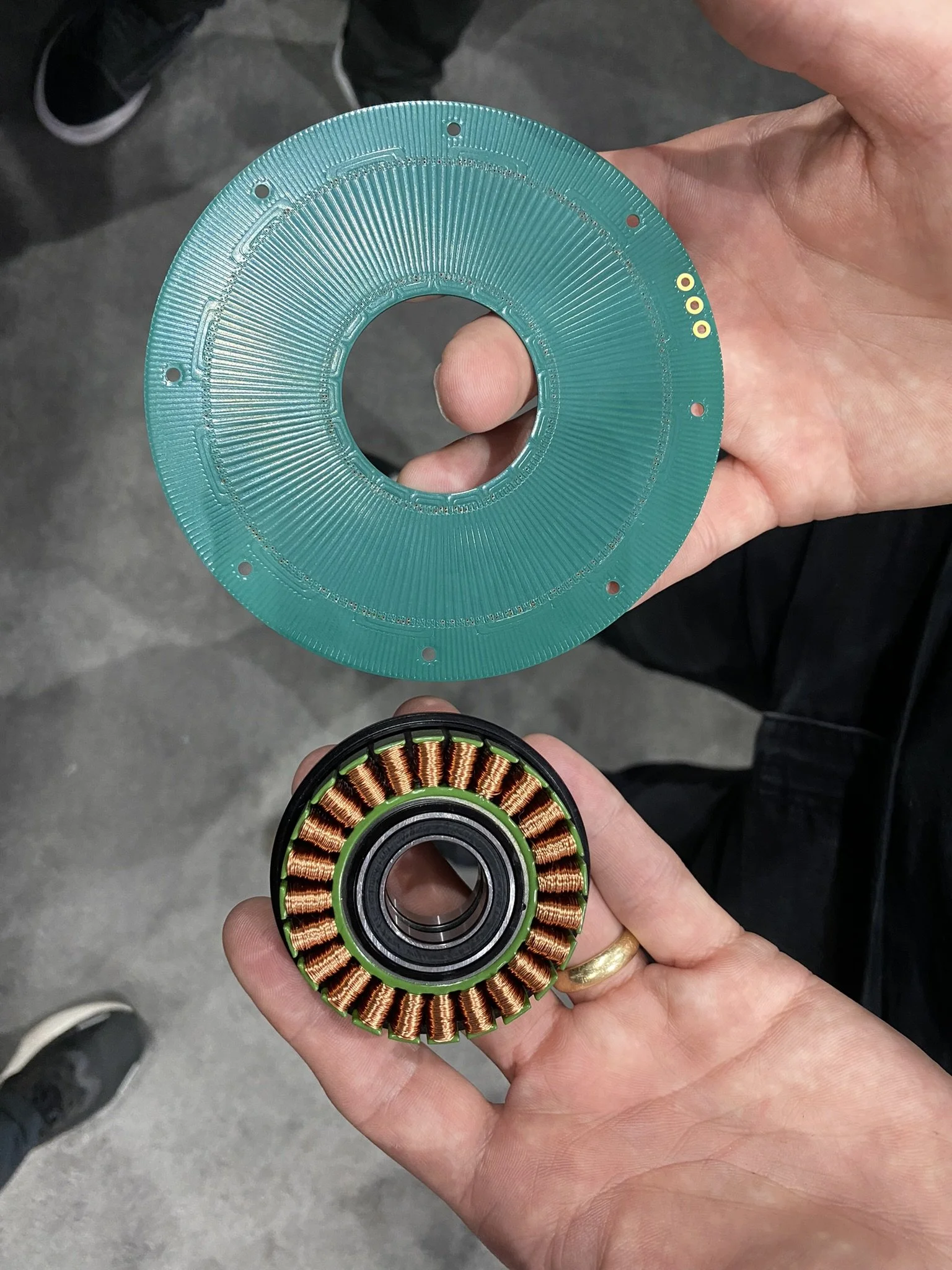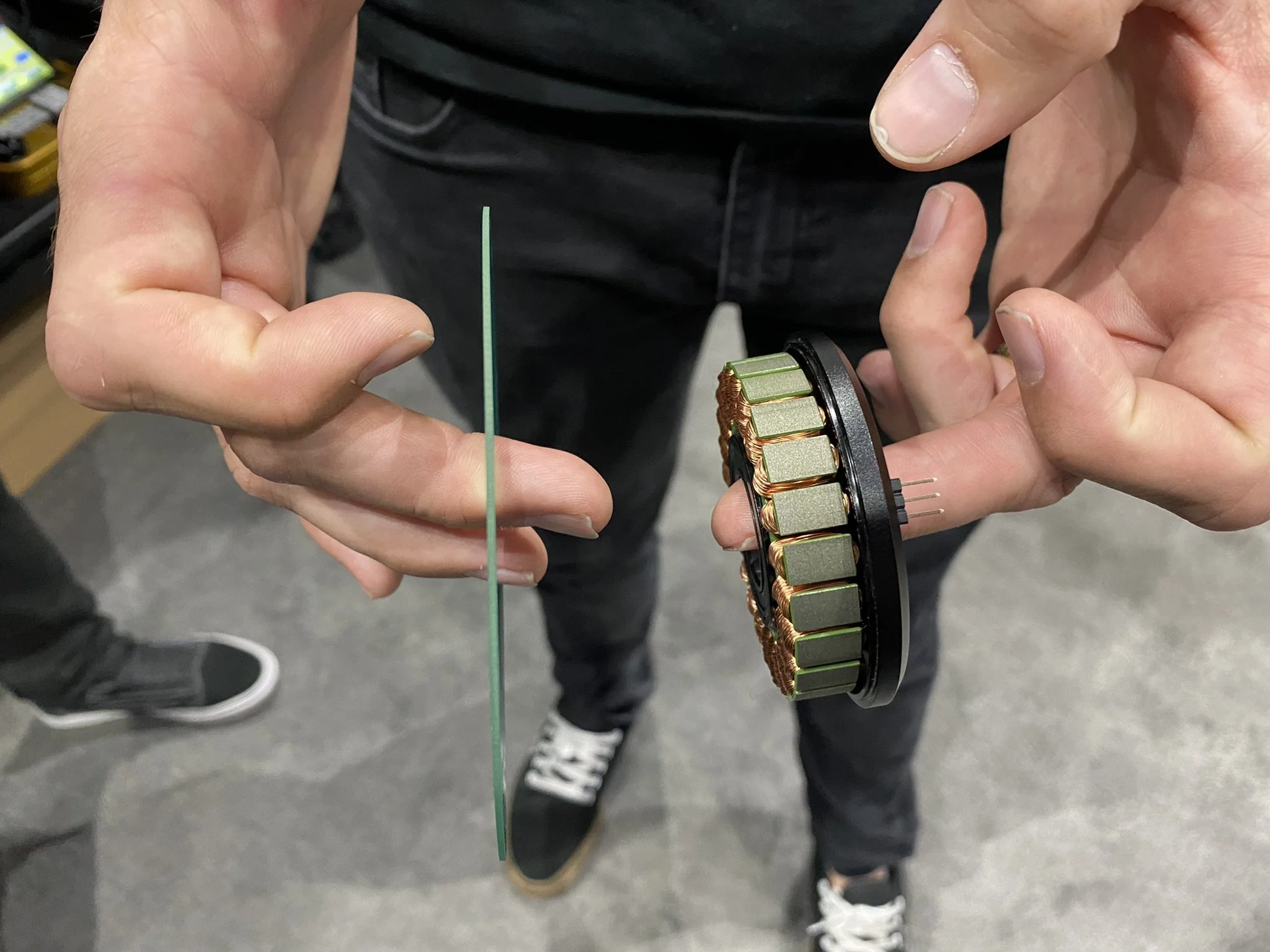
PCB Stator Motors vs Traditional Brushless Motors
TORQ is built around PCB stator motor technology because it offers fundamental advantages over conventional wound-copper motors. The motor architecture inside a stabilized head determines how well it can control inertia, not just how fast it can move.
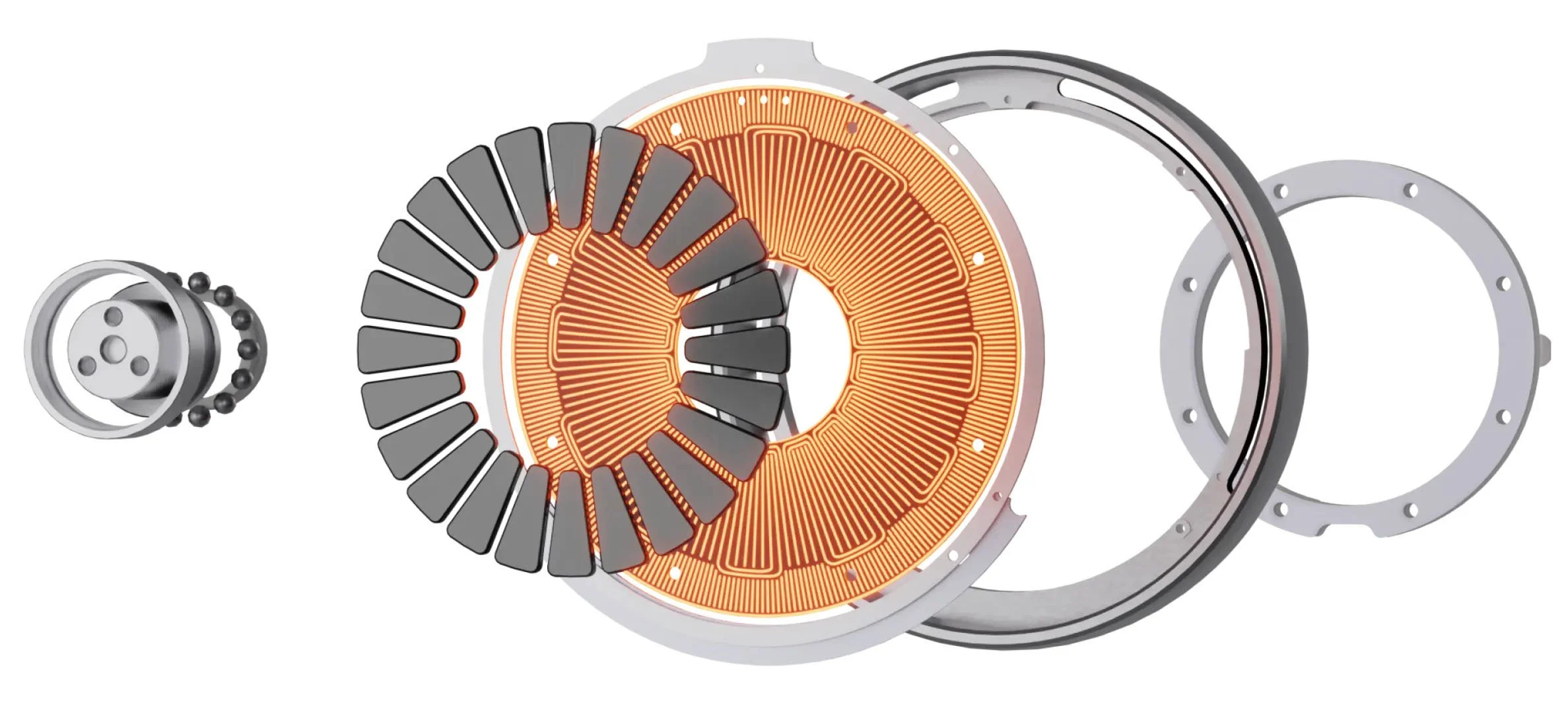
Planar PCB stator geometry enables direct, high-torque control without gear reduction.
Key Advantages vs Traditional Brushless Motors:
More usable torque at low speed
PCB stator motors are optimized for direct torque, not RPM, enabling smooth, controlled motion without gear reduction.
Smoother torque delivery
Planar stator geometry reduces cogging and torque ripple, improving image stability — especially at long focal lengths.
Axial-flux geometry favors inertia
A wide, thin motor profile delivers greater torque leverage and better control of large rotational masses.
Thermally and mechanically predictable
Electronically fabricated stators provide consistent geometry and stable behavior over time and temperature.
Fewer mechanical compromises
High torque without gearing means fewer moving parts, less backlash, and higher long-term reliability.
Efficient use of power
PCB stator motors deliver usable torque more efficiently, reducing wasted energy from heat, vibration, and corrective control effort.
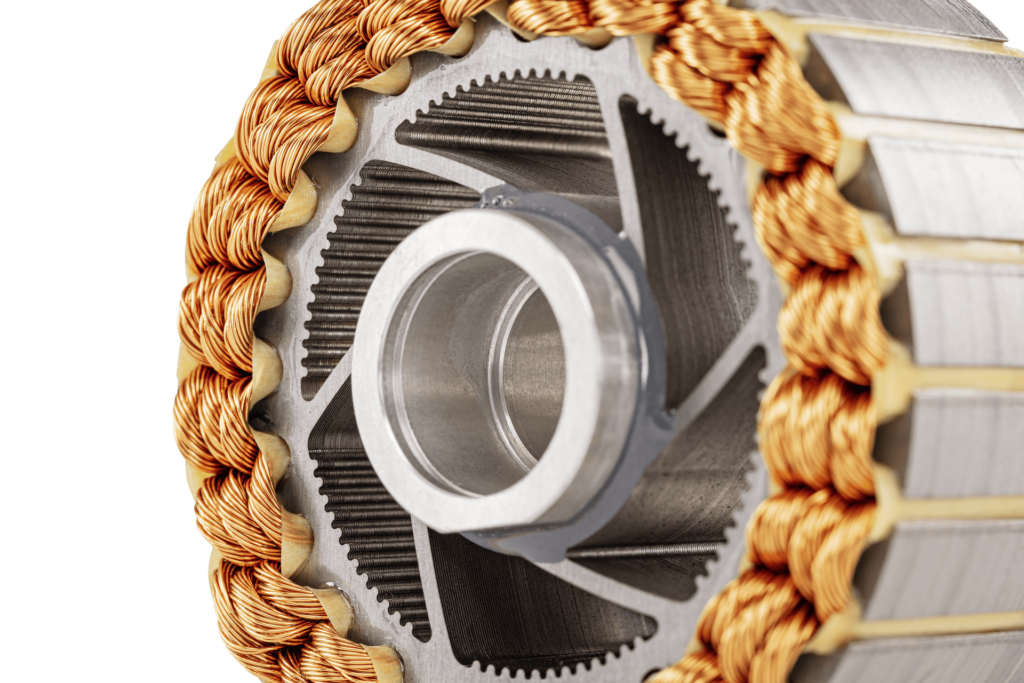
Traditional Brushless Motor Stator
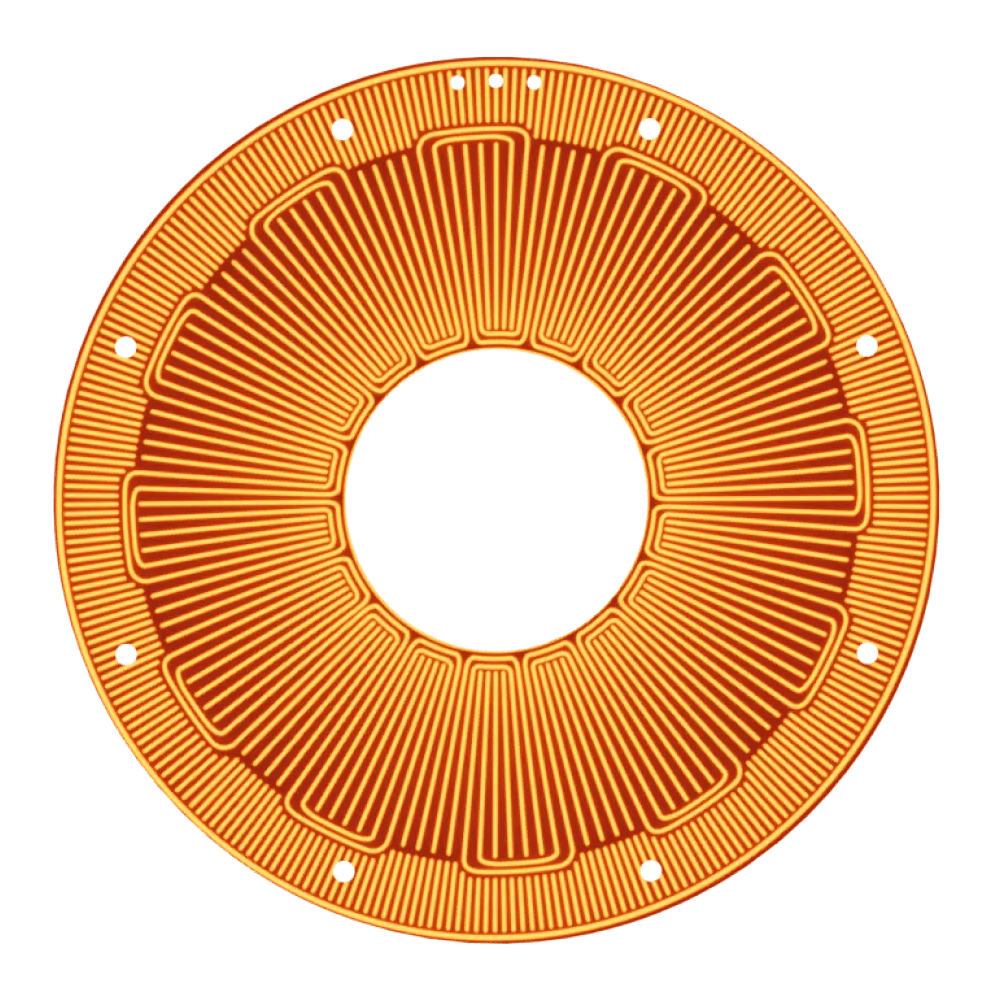
PCB Stator Motor (TORQ + IIMS™)
Compared to traditional brushless motors, PCB stator motors change how torque, inertia, and stability are handled at a fundamental level. The table below summarizes key architectural differences and their real-world impact.
Motor architecture differences that matter for high-inertia stabilization
Capability
High torque at low speed
Low cogging / smooth torque
Inertia-first motor design
Gear reduction required
Stability driven by motor physics
Compatible with IIMS™ Architecture
Predictable thermal behavior
Field Serviceable
Efficient us of available power
Traditional Brushless Motor
❌
❌
❌
✅
❌
❌
❌
❌
❌
PCB Stator (TORQ / IIMS™)
✅
✅
✅
❌
✅
✅
✅
✅
✅
Traditional motors rely on software to compensate for inertia. TORQ’s IIMS™ architecture eliminates those limitations at the motor itself and drives inertia control directly at the motor. Like comparing an engine tuned for horsepower vs one engineered for torque — the TORQ motor architecture prioritizes control where it matters, not just speed.